Steps of the SEA procedure
The steps of an SEA show large similarities to those of an EIA, albeit there are some differences in the details. While the concept of screening exists under the SEA Directive as well, it is plans and programmes using small areas at local level, minor modifications to plans and programmes and plans and programmes as setting the framework for future ’non-EIA projects‘ and ’non-sector‘ plans and programmes that are to be screened under the SEA Directive.
Another difference to the EIA procedure is that while in the EIA only voluntary scoping is required as a minimum from the transposing national legislation, in the SEA process scoping is mandatory. The reason for this difference is very practical: while in the case of a number of projects for which an EIA is required, the environmental factors and impacts that are to assessed may be rather straightforward; in the case of plans and programmes, this is not the case. Therefore, the requirement of mandatory scoping provides the necessary regulatory stability to limit the assessment in cases where it would be rather difficult to set the frontiers thereof otherwise.
The CJEU has assessed the concept of screening under the SEA Directive in a number of cases, including the question of discretion of the Member States in that process. To that end, the CJEU has come to the conclusion that the margin of discretion enjoyed by Member States pursuant to Article 3(5) is limited by the requirement under Article 3(3) in conjunction with Article 3(2), to subject the plans likely to have significant effects on the environment to environmental assessment, in particular on account of their characteristics, their effects and the areas likely to be affected. Consequently, a Member State which establishes a criterion which leads, in practice, to an entire class of plans being exempted in advance from the requirement of environmental assessment would exceed the limits of its discretion under Article 3(5) unless all plans exempted could be regarded as not being likely to have significant effects on the environment (see Case C-295/10, Valciukiene and Others, paras 46-47).
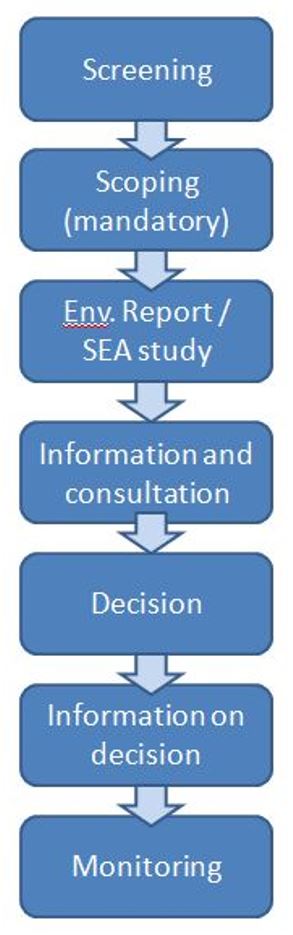
Source: Presentation of the European Commission at the 11th meeting of the Energy Community Environmental Task Force, June 2016